My Month Without Stuff: Lessons from No-Buy June
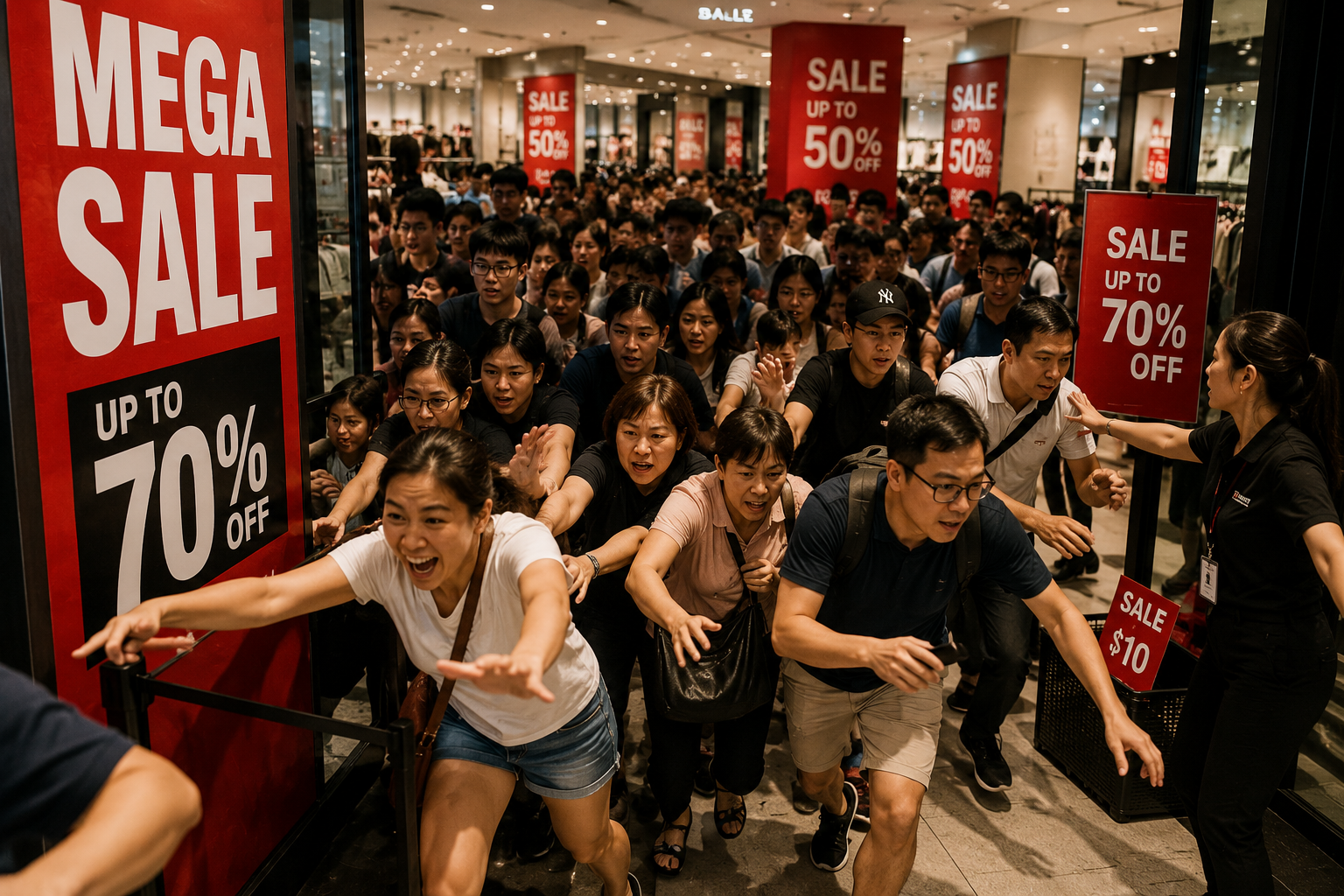
Let’s face it: we live in a world that screams, “Buy! Buy! Buy!” every single second. We see malls on our way to work, get ambushed by social media ads during our lunch break, and are bombarded with billboards promising that the next purchase will finally make us happy. All this noise creates a sneaky feeling of lack—like we’re just not enough and we don’t have enough. This stirs up a quiet sense of unhappiness that we’re told can only be fixed by buying one more thing. But here’s the kicker: getting hooked on consumerism is a lot like getting addicted to a drug. We buy to fill a void that the marketing machine actually created in the first place! Before you know it, your home starts to look less like a cozy sanctuary and more like a warehouse, overflowing with shoes, clothes, and trinkets that serve absolutely no purpose.
That’s exactly why No-Buy June exists. It’s not really about being frugal (though that’s a nice side effect). Think of it as a 30-day reset for your brain—a "diet" or "fast" from shopping. Just like a sugar detox or a no-carb challenge, this fast is designed to show us a powerful truth: we already have enough. We live in an abundant world, and we don't need more stuff to prove it.
A quick reality check: We still live in the physical world, so food is obviously allowed! Medications and emergency items (like crutches if you break a leg) are also totally fine. But everything else? That’s on the chopping block. Toiletries, clothes, shoes, those addictive mystery boxes, and books—all included. The goal is simple: say "no" to unnecessary wants for 30 days.
The Rules of No-Buy June
No buying material things (except food) for the entire month.
Yes, online purchases count too!
Here’s what happened when I took the challenge.
Week 1: The "Second Nature" Struggle
During my first week, I realized something embarrassing: shopping apps were my default companion on my commute. Opening Amazon and Shopee was like second nature. It felt weird notto do it! Instead, I started clearing my emails or reading a book. That’s when I discovered I was on way too many mailing lists. Xero Shoes, Lululemon, and Nobull were all tempting me with "upcoming sales," while Amazon was telling me about things I apparently "might like." I unsubscribed from all of them. The lesson? If you entertain the temptation, you’ll eventually give in and buy the "latest and greatest."
Week 2: The Fog Begins to Lift
By the second week, I’d broken the habit of window-shopping on my phone. Fewer promotional emails meant fewer temptations, and the urge to buy material things started to fade. Then, the news hit about the CJ Hendry flower market frenzy in Singapore. People were rushing to grab "rare" flowers, and some were even selling for five times their original price on the secondary market! I thought to myself, “Who would pay $50 for a flower plushie you can get for $2 on Taobao?” The answer? Many people. The hype, the fear of missing out (FOMO), and Singapore’s famous Kiasu (fear of losing out) mentality had created a perfect storm of consumerism.
Week 3: The Art of Consumerism
Week three brought another CJ Hendry event: Juju World, a yellow-themed art show with slides and a giant ball pit. Since it was the school holidays, my wife and I took our niece. She had a blast! When it was time to leave, we wanted to buy her a small Juju toy as a souvenir. But guess what? They were all sold out. And it was only the second day! Staff told us they underestimated demand, while Instagram was already flooded with people showing off their massive hauls of "rare" models.
That’s when it hit me: Juju World wasn’t really about the toy—it was a performance on the ugliness of consumerism. CJ Hendry could have limited sales or increased supply, but instead, she created pseudo-scarcity to stir up hype. And like all hypes (remember Labubu?), it will eventually fade. It was a brilliant, ironic wake-up call.
Week 4: The Final Temptation
As I entered the final stretch, Amazon Prime made sure to test my willpower. Their Prime Day sale was plastered all over train stations with massive discounts: 70% off selected items, 30% off Legos, 40% off shoes. I had to remind myself, "These are wants, not needs." Life would go on perfectly fine without them.
What I Learned
Completing this month-long fast made me reflect deeply. What drives our need to over-consume? Are we just victims of brilliant marketing? Is it a feeling of lack that we try to overcompensate for? Is it Singapore’s competitive culture, turning goods into trophies? Or is it a craving for validation because we feel low self-worth? Maybe we’re just living such unhappy lives that we need the dopamine hit of buying something new to numb the pain.
Whatever the reason, beyond the economy, consumerism brings almost no real benefit to our lives. It’s impractical to cut it out completely, but we can certainly minimize it. We can stop it from controlling us and making us act in ways we aren't proud of. Life becomes simpler, lighter, and infinitely more meaningful when we stop chasing fads and start filling our lives with experiences instead of stuff.
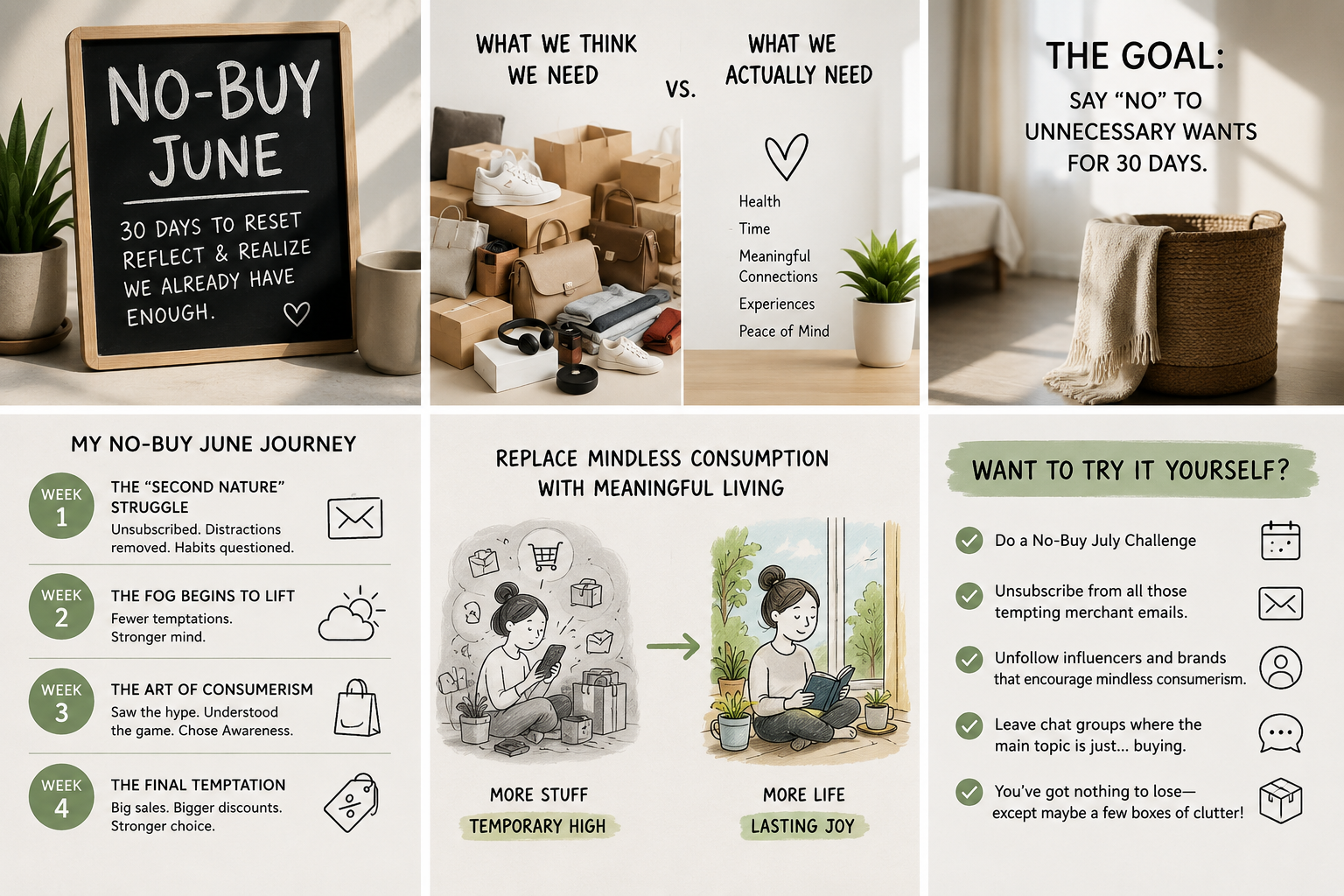
Want to Try It Yourself? Here’s How:
Do a No-Buy July Challenge – Give it a go!
Unsubscribe from all those tempting merchant emails.
Unfollow influencers and brands that encourage mindless consumerism.
Leave chat groups where the main topic is just... buying.
You’ve got nothing to lose—except maybe a few boxes of clutter!